Banner
Heim Blog

Container Accommodation for Construction, Oil Field, Mining, and Remote Sites

Container Accommodation for Construction, Oil Field, Mining, and Remote Sites

March 24, 2026

Container accommodation has become a safe and rapidly deployable housing solution for contractors and mining companies to provide for their workers. It serves as an alternative to traditional construction methods, which are time-consuming and involve unpredictable costs.


What Is a Container Dormitory?


A container dormitory, also called a prefab workforce camp, or portable bunk house, is a living space engineered from steel-framed containers. They ship flat-packed or pre-assembled and can be stacked, linked, and configured into anything from a single bunk room to a full multi-story workforce.


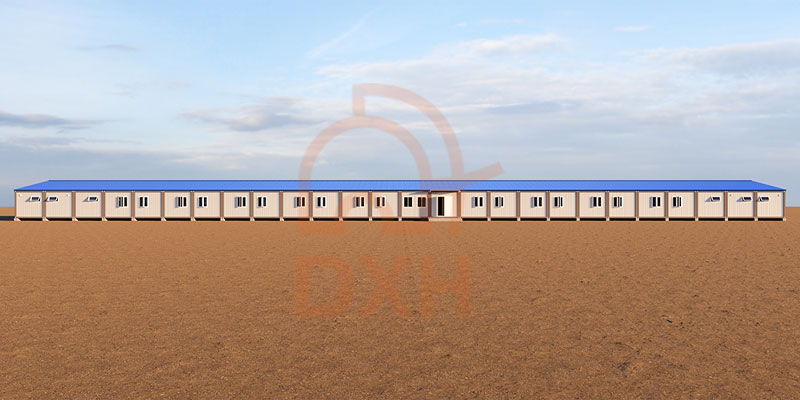
Prefabricated-Container-Dormitory-Designs


Who Uses Container Accommodation?


Construction Sites


Modular accommodation units arrive before the concrete is even poured and relocate when the site moves — no permanent footprint, no teardown costs.


Oil Field and Energy Camps


Insulated sandwich panel walls and weather-resistant frame structures provide comfortable living conditions in environments where traditional buildings cannot withstand the conditions (such as high temperatures, dust, and strong winds).


Mining and Quarry Operations


Scalable container camps can grow from 50 to 500+ beds as the workforce ramps up, with shared amenities, such as canteens, bathrooms, and storage.


Infrastructure and Rail Projects


Linear projects — highways, pipelines, rail corridors, which require housing that follows the work. A containerized camp can be broken down, transported along the route, and reassembled in under a week.


5 Reasons to Choose Modular Container Camps Over Traditional Construction


1. Speed of Deployment


Factory-prefabricated components travel directly from the production line to the job site and are assembled by a small team — sometimes in as few as 48 to 72 hours for a mid-size camp. Compare that to the 3–8 weeks a traditional masonry dormitory block typically demands.


2. Scalability on Demand


Container housing units scale in both directions: add a row of bunk modules when the crew expands, remove them when it contracts. There's no wasted square footage sitting idle or costly renovation when headcount shifts.


3. Durability in Harsh Conditions


Built with galvanized steel frames, EPS or rock wool sandwich panels, and corrosion-resistant coatings, they are engineered to withstand extreme heat, sub-zero temperatures, monsoon rain, and high winds. /*Our accommodation units are tested for seismic resistance, a critical consideration in geologically active mining and construction regions.


4. Full Amenity Integration


Modern container dormitory layouts can be designed to meet your needs. Individual rooms or shared suites can include private en-suite bathrooms, climate control, and built-in storage. For large workforce camps, cover canteens, laundry, medical posts, and site offices — all within the same modular construction.


5. Cost Efficiency Over the Project Lifecycle

  • • Lower upfront expenditure compared to permanent construction
  • • Reusable across multiple projects
  • • Energy-saving insulation reduces electrical costs by 20–35%
  • • Minimal maintenance requirements due to factory components
  • • Less waste cuts disposal fees and carbon footprint


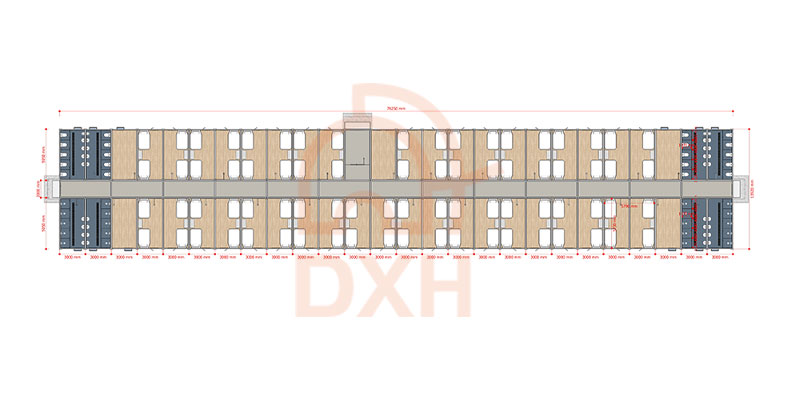
Container-Accommodation-for-Large-Camp-Layout


Container Camps vs. Traditional Dormitories


Factor Container / Modular Camp Site-Built Masonry Dormitory
Setup time 2–7 days 3–10 weeks
Upfront cost Lower (prefab) Higher (materials + labor)
Relocatability Fully mobile, reusable Permanent — write-off at end
Scalability Add/remove modules as needed Fixed capacity, costly to expand
Construction waste Low (factory process) Significant on-site waste
Energy performance High (insulated panels) Variable, often poor
Roof Weatherproof deck Metal deck panel, waterproof membrane
Customization High — factory-tailored Limited post-construction
Environmental footprint Lower (less waste, reusable) Higher material & waste impact


4 Critical Things to Verify Before Choosing a Supplier


  • • Certifications: ISO 9001 Quality Management System certification and the CE mark are essential prerequisites.
  • • Wall and Roof Specifications: Sandwich panels—with EPS, rock wool, or polyurethane cores—determine their thermal insulation, fire resistance, and sound insulation properties.
  • • Frame Materials and Corrosion Protection: Hot-dip galvanized Q235 or Q345 steel with an anti-rust coating is the standard configuration for long-term outdoor use.
  • • Structural Load-Bearing Capacity: Multi-story stacked structures are common in high-density camps. Verify that the frame design and certification meet the required number of floors—typically, worker camps require 2 to 3 stories.


Real-World Example of Modular Container Accommodation


Xinjiang Modular Container Housing Project


The design of these modular container dormitories takes Xinjiang’s extreme climatic conditions fully into account. The main structure features a high-strength steel frame, which is sturdy and durable enough to withstand frequent strong winds. The walls are constructed with high-quality insulation panels filled with high-density insulation, effectively blocking the bitter cold in winter and providing excellent thermal insulation in summer to keep the interior cool.


The interior layout of each dormitory includes essential amenities such as beds, desks, chairs, and wardrobes. The bathrooms feature a dry-wet separation design and are equipped with water-saving fixtures, ensuring efficient water usage in the Xinjiang region, where water resources are relatively scarce.


Yunnan Container Housing Community


Given Yunnan’s rugged terrain and diverse climate, traditional construction methods present significant challenges. The Yunnan Container Housing Community project uses eco-friendly, durable materials such as light steel and rock wool sandwich panels. This lays a solid foundation for efficient construction and safe living, tailored to meet the local housing needs of Yunnan.


The light steel frame offers high tensile strength and rigidity. Through professional structural design, it can effectively withstand seismic shocks and resist the tensile forces of strong winds. The wall sandwich panels are filled with rock wool, achieving Class A fire resistance and providing residents with valuable escape time in the event of a fire.


Container Camp Accommodation Planning Best Practices


  • 1. Separate accommodation from noisy utilities and recreation areas.
  • 2. Ensure clear, well-lit pedestrian pathways and emergency vehicle access.
  • 3. Position dining and medical facilities centrally for convenience.
  • 4. Maintain adequate spacing between units for privacy, ventilation, and safety.


Our engineers provide customized layout drawings based on your site conditions, workforce size, project duration, and local regulations.


Configuration Options for Different Sites of Prefab Container Accommodation Needs


Single-Story Linear Units


The most common layout for small teams (20–80 people). Dormitory units are arranged in parallel rows, sharing a common corridor or open passageway. They are quick to install, easy to expand, and simple to maintain.


Two- and Three-Story Housing Layouts


For locations such as oilfield operations or mountainous mining areas, a vertically stacked modular design is an ideal choice. Our two-story modular dormitory structures feature reinforced concrete connection plates and external stair towers, ensuring that the interior experience remains equally comfortable across both levels.


Service-Oriented Camp Accommodation Complexes


Larger projects (300+ beds) typically require a complete ecosystem, including sleeping modules, communal bathrooms and showers, dining halls with kitchen facilities, laundry rooms or common lounges, on-site medical stations, and project offices. All these facilities can be delivered using the same modular system, ensuring architectural consistency and simplifying installation.


Mobile Modular Container Accommodation Units


For short-term or highly mobile applications, such as exploration teams, pipeline construction, and seasonal agricultural operations, prefabricated mobile accommodation units enable efficient deployment and redeployment cycles.


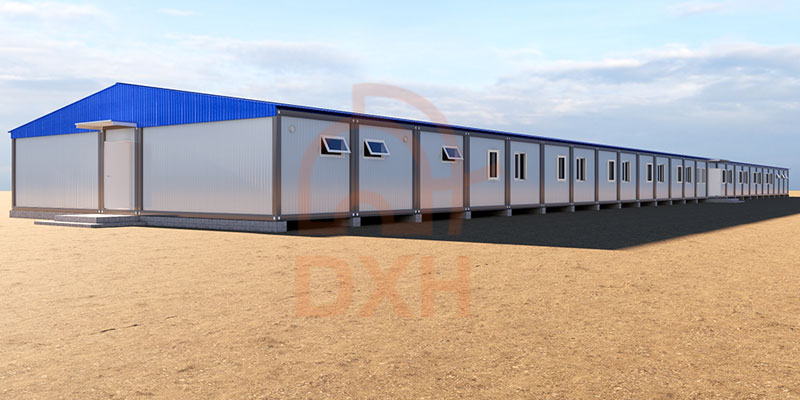
Layout-Design-for-Single-Story-Container-Housing-Units


Ready to House Your Modular Workforce Accommodation Efficiently?


Streamline your employee housing management with durable, cost-effective modular housing solutions designed for rapid deployment and long-term, stable operation. DXH House understands the demands of large-scale projects—from remote construction sites to industrial camps—where efficiency, reliability, and comfort are paramount.


Get a quote and site-specific layout plan tailored to your project's needs. Our team will work closely with you to optimize space, logistics, and installation schedules, ensuring your employees can move in quickly and efficiently.


As an ISO 9001 and CE-certified manufacturer, DXH House provides high-quality modular buildings that meet international standards and can be shipped worldwide. Whether you need temporary accommodations or permanent housing, we offer scalable design solutions to fit your project's scope and budget.


Get your project started today—contact us to discuss your needs, and we'll create a personalized housing solution with fast delivery and global shipping.


Frequently Asked Questions


How Long Does It Take To Set Up A Container Dormitory Camp?


Construction time depends on camp size, but a well-organized team using factory-prefabricated flat-pack kits or modular components can typically complete 20 units within 48 to 72 hours. This is faster than traditional on-site construction, and construction, oil, and mining operators opt for this approach due to tight schedules.


Can Container Housing Be Used In Deserts, Arctic Zones, Or High Humidity?


The walls and roofs of modular dormitory units are insulated with EPS, rock wool, or polyurethane sandwich panels, providing excellent thermal insulation (R-values range from R-15 to R-25 depending on panel thickness). The steel frames feature a corrosion-resistant coating, making them suitable for high-humidity coastal environments or areas prone to saltwater corrosion. For specific applications or weather conditions, please consult our sales team to upgrade materials and frames and ensure additional protection.


Do Housing Units Meet Building Codes And Fire Standards?


DXH House's housing units carry ISO 9001 and CE certification. Wall panels can be specified with Class B1 or A-grade fire ratings. Structural frames are load-rated and tested for multi-story use.


How Much Does A Container Dormitory Cost Compared To A Traditional Dormitory Block?


Modular container housing delivers 30–50% lower all-in costs for temporary accommodation needs. The savings come from shorter installation timelines, factory-controlled manufacturing efficiency, and the ability to recover the capital investment by reusing modules on future projects.


Can Modular Dormitory Buildings Be Customized To Match Our Brand Or Specific Requirements?


Yes. This includes room layouts and bed configurations; exterior wall colors and cladding; electrical and plumbing specifications that comply with local standards; company branding on exterior panels; and other specific requirements. We offer OEM/ODM services, and our engineering team will work closely with you to ensure that all custom specifications are reviewed before production begins.


eine Nachricht hinterlassen

eine Nachricht hinterlassen
Wenn Sie an unseren Produkten interessiert sind und weitere Einzelheiten erfahren möchten, hinterlassen Sie bitte hier eine Nachricht. Wir werden Ihnen so schnell wie möglich antworten.
einreichen

Unsere Stunden

Mo. 21.11. - Mi. 23.11.: 9.00 - 20.00 Uhr
Do. 24.11.: geschlossen – Happy Thanksgiving!
Fr. 25.11.: 8:00 - 22:00 Uhr
Sa. 26.11. - So. 27.11.: 10.00 - 21.00 Uhr
(Alle Stunden sind Eastern Time)

Contact Us: james@dxprefabhouse.com

Heim

Produkte

WhatsApp

Kontaktieren Sie uns